
The Science of Waxing Hygiene: How Skin Reacts to Contamination
Let’s be honest, waxing feels like a small act of bravery wrapped in hot wax and a paper strip. The smooth skin payoff? Worth it. But when you end up with bumps, redness, or worse, an infection, you start to wonder: what really went down in that treatment room? Here’s the thing: post-wax skin is needy. It's exposed, sensitive, and incredibly vulnerable to the invisible stuff most people overlook, like double-dipped sticks, reused tools, and wax pots that look clean but secretly harbor bacteria. This blog takes you under the surface (literally) to understand how skin reacts to waxing contamination, and how to make smarter, safer choices.
Why Your Skin Is Extra Vulnerable After Waxing
Your skin might feel soft and smooth after waxing, but underneath, it’s doing damage control. Here’s what’s actually happening and why it matters.
What Waxing Actually Does To Your Skin Barrier
Waxing alters the structure of your skin in real-time. When wax is pulled off, it lifts not only the hair but also part of the outermost layer of your epidermis, known as the stratum corneum. This layer acts like your skin’s security system: it locks in moisture and blocks out bacteria, allergens, and environmental stressors. After waxing, that barrier is disrupted.
Even if your skin feels smooth, it’s biologically more exposed than it was before. Without that protective layer functioning at full strength, your skin is more vulnerable to trans-epidermal water loss, friction-based irritation, and microbial invasion. It becomes easier for bacteria to enter, harder for moisture to stay in, and far more likely that everyday contact with clothing, sweat, or shared surfaces will trigger a reaction or infection.
Why Post-Wax Reactions Like Redness Are Normal
Redness after waxing is a sign your immune system is doing its job. Waxing is a form of controlled trauma. It causes micro-tears around the hair follicle and disrupts the surface barrier, which cues your immune system to send reinforcements.
Blood vessels dilate, inflammatory messengers are released, and localized swelling occurs to support healing. That’s why the area may look pink, feel slightly warm, or develop temporary bumps. These are signs of acute inflammation, not infection. Most of these symptoms resolve within moments, some take 24 hours. But if they escalate, spread, or worsen instead of calming down, that’s when a routine immune response might be giving way to something more serious like folliculitis, a reaction to contamination, or an allergy to ingredients in the wax.
How Long Your Skin Stays Vulnerable After Waxing
Your skin rebuilds its barrier slowly after waxing. The highest risk period for contamination is the first 24 to 48 hours post-wax. During this window, your hair follicles remain open, the epidermal layer is still recovering, and immune cells are actively working to re-seal and restore the skin. Any exposure to bacteria, friction, heat, or trapped sweat during this period can trigger a negative skin response.
Activities like working out, swimming, touching the waxed area, or wearing tight clothing all carry elevated risk. Even using your usual skincare products might sting or clog healing follicles. Once that barrier has been re-established, your risk drops, but that doesn’t happen immediately, even if the redness disappears.
How Skin pH and Bacteria Interact Post-Wax
Your skin’s pH is naturally acidic, around 5.5, and that acidity plays a crucial role in defending against bacteria. It keeps your microbiome in balance, discourages harmful microbes from multiplying, and helps maintain a tight, resilient skin barrier. But waxing can disrupt that balance. Whether it’s from the wax itself, residue left behind, or harsh post-wax products, pH can be pushed into alkaline territory.
An alkaline shift makes it easier for bacteria to grow and harder for your skin to defend itself. Combine that with open follicles and a weakened barrier, and the conditions are perfect for breakouts, ingrowns, or even fungal overgrowth. If your skin feels unusually itchy, tight, or starts reacting to products that never used to be a problem, your pH might be off, and your skin’s bacterial balance may be compromised.
What Cross-Contamination Really Looks Like in a Wax Studio
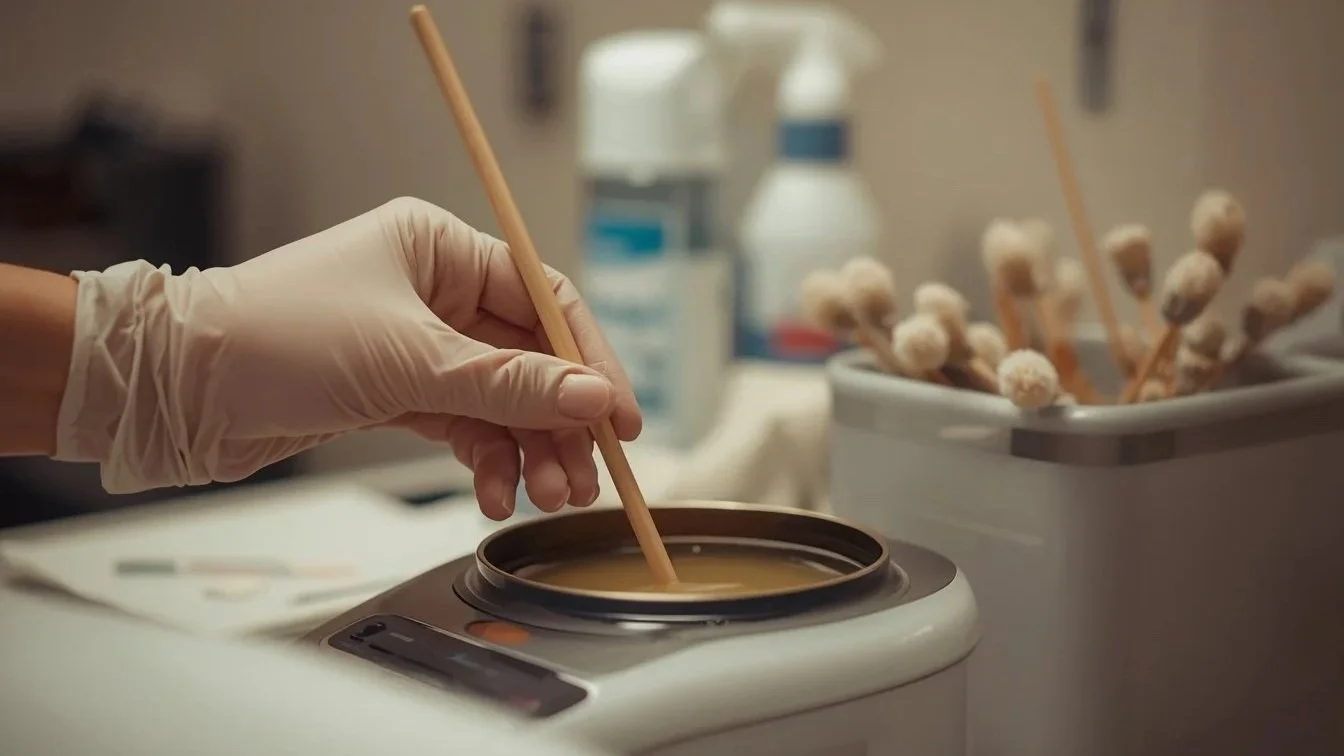
You don’t need a microscope to spot the risks. Cross-contamination hides in plain sight, and most clients don’t realize what to look for until it’s too late.
The Hidden Risks Behind Double-Dipping
Double-dipping is the most direct form of cross-contamination in waxing services. Each time a spatula touches the skin, it picks up bacteria, sweat, dead skin cells, and possibly blood. When that same stick is dipped back into the communal wax pot, those contaminants are introduced into a warm, sticky medium where microbes can survive, and in some cases, thrive. Wax is often not hot enough to kill bacteria or viruses on contact. That means one contaminated stick can quietly compromise the entire wax supply, posing a risk to every client who comes afterward. Even if you never see it happen, the effects show up later, often in the form of folliculitis, breakouts, or more serious infections. Studios may appear clean but still fail at the basics of understanding cross-contamination, especially when double-dipping is normalized behind the scenes.
How To Recognize Unsafe Studio Habits
Unsanitary practices in a waxing studio will leave clues. If your esthetician isn’t wearing gloves or doesn’t change them before your service begins, that’s already a sign that hygiene isn’t being taken seriously. If tools are pulled from an open tray rather than a sealed container, or if used wax sticks aren’t immediately discarded, cross-contamination is likely.
Look at the treatment bed, is it freshly lined, or are there creases and wax spots from the last client? Are disinfectant products in view and in use between services, or is there a rushed turnover with no cleaning in sight? A studio that prioritizes sanitation builds these steps into every appointment, not just when someone’s watching. Often, the most telling details are the subtle signs of unsanitary waxing salons that clients overlook because the space appears polished.
Why Esthetician Training Matters More Than You Think
Sanitation is a core part of formal training, and the quality of that training directly impacts the safety of every service. Licensed estheticians receive education in infection control, cross-contamination prevention, proper tool care, and client skin assessments. They’re trained to understand how microbes spread, how the skin barrier functions, and how to maintain sterile conditions even during high-traffic days. But training doesn’t stop at graduation.
The best professionals update their knowledge regularly, stay compliant with changing regulations, and take sanitation as seriously as technique. If your esthetician avoids questions about hygiene or seems unsure about procedures, it may signal a lapse in standards. Clean technique is learned, practiced, and proven every single session.
How Dirty Waxing Tools Can Lead to Infection
Not all irritation is “just a reaction.” Sometimes, it’s your skin fighting off something it should’ve never been exposed to in the first place.
What Causes Infections After Waxing
Infections can be a consequence of poor sanitation meeting vulnerable skin. During waxing, the hair follicle opens temporarily, making it easier for microbes to slip past your skin’s natural defenses. If the studio reuses sticks, skips cleaning tools, or fails to disinfect the treatment bed, bacteria and fungi gain easy access. This is especially critical in the first 24 hours post-wax, when the skin’s barrier is still healing and the pores are still open. Contaminated wax, unwashed hands, and recycled towels all accelerate the spread of these pathogens. Infections after waxing often trace back to lapses in waxing hygiene standards, especially when skin is already compromised.
What Types Of Pathogens Thrive In Wax Pots
A communal wax pot is warm, sticky, and constantly exposed to air, skin, and sweat. That’s the ideal environment for certain microbes to thrive, especially bacteria like Staphylococcus aureus, Pseudomonas aeruginosa, and fungal spores that survive on surfaces. These pathogens don’t need much to take hold. A single double-dip with a contaminated spatula or a day of open exposure is enough to seed bacteria into the wax. And once they’re there, the warmth keeps them alive, and the wax carries them directly onto the next client’s skin. A clean-looking pot tells you nothing if the studio doesn’t use single-use applicators or cover the wax between uses.
Can Waxing Transmit Fungal Or Viral Infections?
Yes, waxing can transmit both fungal and viral infections if basic sanitation standards are not met. Herpes simplex virus (HSV), human papillomavirus (HPV), and even common fungal infections like ringworm or candidiasis (yeast) have all been linked to shared waxing tools or cross-contaminated surfaces.
If gloves aren’t changed, tools aren’t sanitized, or sticks are reused, one client’s viral particles can be passed along to the next. The skin may not bleed, but it doesn’t have to; friction and heat alone can allow microbes to transfer through microscopic tears or abrasions. Being cautious about hygiene means understanding the reality of how transmission works.
Are Gloves Always Required During Waxing?
Glove use in waxing isn’t required in every U.S. state, but skipping them is a health risk. Gloves create a protective barrier that prevents the esthetician from transferring bacteria or bodily fluids between themselves and the client. Without gloves, there’s a higher chance of cross-contamination, especially when moving between tools, surfaces, or body areas. Some professionals still rely on hand washing alone, but even the most diligent washing can't guarantee safety if hands touch multiple surfaces mid-service. A licensed esthetician who prioritizes safety will use gloves as a standard part of their routine and change them whenever they move between tasks. If you don’t see that happening, or if they downplay the need for gloves, it’s a clear signal to reconsider your visit.
Spotting the First Signs of Post-Wax Infection
If your skin starts acting weird after waxing, don’t ignore it. Some signals are harmless, others are warnings that need attention.
When Redness Is Just Irritation, And When It’s Not
Redness right after waxing is expected. It’s your skin’s natural response to hair removal and should start fading within a few hours. But if that redness sticks around for more than 48 hours, becomes increasingly tender, or begins to feel hot to the touch, you may be looking at more than simple irritation. Signs like swelling, itchiness, or fluid-filled bumps signal the possibility of an infection, especially if hygiene was compromised during the service. When irritation turns into inflammation or starts to spread, your body is trying to tell you it’s fighting something off. Pay attention to the timeline. Early intervention makes all the difference in preventing long-term skin damage.
Common Post-Wax Issues And What They Might Mean
After waxing, it’s normal to see a few small red bumps, particularly around the follicle area. That’s normal and often resolves on its own. But if those bumps turn into whiteheads, your skin might be dealing with a bacterial breakout. If the area becomes itchy or develops a scaly patch, especially in warm, moist places like underarms or bikini zones, it could indicate a fungal infection. A circular rash with a raised edge? Could be something else entirely. While these reactions share overlapping symptoms, they stem from different causes: either microbes introduced during waxing or poor post-care afterward. Keep in mind, these types of reactions are rare. Knowing what each pattern means helps you decide whether to wait, apply a topical, or call a dermatologist.
Bacterial Vs Fungal Skin Infections
Bacterial infections usually present as isolated lesions that are painful, swollen, and warm to the touch. They may fill with pus and progress quickly if not treated. In contrast, fungal infections tend to appear as itchy, red patches that spread slowly over time and may develop a ring-shaped border or flaking skin.
You might also notice the difference in location, bacterial infections often form around hair follicles, while fungal infections thrive in creases, folds, or damp areas. Both can occur after waxing if hygiene lapses or if post-care isn’t followed. If you’re unsure which one you’re dealing with, don’t guess. A dermatologist can identify the type of infection quickly and recommend the right course of treatment before symptoms worsen.
What Role Do Allergies Play In Your Reaction?
Sometimes, the issue after waxing is an allergic reaction. If your skin develops hives, stings on contact, or shows redness only in the exact area the wax touched, you may be reacting to an ingredient in the wax itself. Common triggers include resin, artificial fragrance, or preservatives. These reactions can mimic infection but tend to appear faster, sometimes within minutes of the service.
Allergic responses often present with a burning sensation rather than heat or pus and may spread beyond the waxed area in more severe cases. If you’ve reacted to waxing before, consider requesting a patch test or switching to hypoallergenic wax. Not all post-wax problems stem from hygiene. Sometimes, it’s just your skin saying: this formula isn’t right for me.
What Safe Sanitation Should Actually Look Like

A clean studio runs on protocols. These are the safety details that separate surface-level neatness from real hygiene.
The Difference Between Sterilization And Disinfection
Understanding the gap between sterilization and disinfection can completely change how you evaluate the hygiene standards of a waxing studio. Sterilization is the highest level of cleanliness. It’s the complete elimination of all microbial life, including bacteria, viruses, and resistant spores, and usually requires high heat through equipment like autoclaves.
In contrast, disinfection kills most pathogens but does not remove every form of microbial life. Hospital-grade disinfectants can wipe out bacteria and viruses, but they don’t sterilize. Most waxing studios don’t have an autoclave, and that’s not always a deal-breaker. But that makes consistent and thorough disinfection between every client absolutely non-negotiable.
If a studio skips this step, or uses diluted or expired solutions, they’re inviting microbial contamination onto freshly waxed skin, skin that’s more vulnerable than usual. Knowing the difference between these two terms lets you ask the right questions and protect yourself in environments where assumptions often replace protocols.
Hygiene Checklist For Waxing Salons
Here’s what a clean, properly run waxing studio should always do before and during your service:
Wear fresh gloves for every client, and change them after touching anything non-sterile.
Use each spatula or stick once, then discard it immediately—no double-dipping.
Keep reusable tools like tweezers or scissors in sealed pouches or visibly sanitize them before use.
Wipe down treatment beds with disinfectant between clients.
Replace linens or coverings after every service with clean or disposable ones.
Avoid reusing anything that touches skin without proper sanitation.
If even one of these steps is skipped, it’s a hygiene risk, no matter how clean the space looks.
What To Ask Before Booking
Asking about a studio’s sanitation practices can feel awkward, but it shouldn’t be. The way a studio responds is often more revealing than the policy itself. Try these simple, direct questions:
“Do you use a new stick for every dip?”
“How do you clean your tools between clients?”
“Do you wear gloves for all services?”
These answers reveal how seriously the studio takes hygiene. If the response is confident and clear, that’s a good sign. If it’s vague or dismissive, that’s your cue to look elsewhere.
Should Your Wax Contain Antimicrobial Ingredients?
While not required by law, some waxing studios use waxes that include antimicrobial ingredients like tea tree oil or chlorhexidine. These components can help reduce microbial presence on the skin during waxing, which is especially useful for people prone to breakouts or for services on areas that are more susceptible to irritation. Think bikini line, upper lip, or underarms, places where heat, sweat, and friction are common after waxing.
Choosing a wax with antimicrobial properties isn’t a replacement for clean tools or good technique, but it does add a layer of protection that can make a noticeable difference in recovery. If you have sensitive skin or a history of post-wax irritation, asking about wax ingredients is smart prevention.
Before You Book That Appointment
Booking a wax should never feel like a gamble. Here’s how to protect yourself before you even step into the studio.
What Sanitation Laws Actually Say About Waxing In The U.S.
In the United States, sanitation standards for waxing services are legal requirements enforced by state cosmetology boards. Every state has its own rules, but most include the basics: tools must be cleaned and disinfected between clients, gloves should be worn during services, and single-use items like waxing sticks must never be reused.
If a waxing studio skips glove changes, reuses disposable materials, or fails to clean surfaces between appointments, it’s violating sanitation protocols set by their state board. Before you book, it’s worth checking what your state requires, because studios that ignore these laws are risking their license.
When To Reschedule: Cuts, Acne Meds, Or Illness
Timing your wax around your skin’s condition is one of the most overlooked steps in personal care. Waxing when your skin is compromised, whether from a sunburn, an active breakout, a cut, or the use of medications like retinoids or antibiotics, dramatically increases your risk of infection and irritation. These conditions thin the skin or weaken your immune defenses, making it harder to recover after a wax. Even something like a cold sore, a minor rash, or a fever can affect how your skin reacts to hair removal.
Waxing is controlled trauma to the skin, and your body needs to be in a state where it can handle that. Waiting a few extra days might feel inconvenient, but it can spare you weeks of inflammation or a potential infection. A good esthetician will thank you for rescheduling.
How To Politely Screen Your Esthetician
If you’re unsure whether a waxing studio takes hygiene seriously, start with a simple conversation. You’re not being picky. This has to do with protecting your skin. Here are a few easy ways to ask:
“I’m careful with my skin. Can you walk me through your sanitation process?”
“Can I ask how you clean your tools between clients?”
“Do you wear gloves for every service?”
“How do you handle double-dipping?”
“Are your reusable tools sterilized or disinfected?”
A professional esthetician will answer these questions clearly, without getting defensive. If they seem open, specific, and confident, that’s a great sign. If they act vague or annoyed, it’s worth trusting your gut and finding a place that takes sanitation as seriously as you do.
Frequently Asked Questions
Still have questions about waxing safety? These answers cover what most people are too nervous or too rushed to ask before their appointment.
Can Waxing Cause Bacterial Infections?
Yes, waxing can lead to bacterial infections, especially when hygiene protocols are ignored. The act of waxing temporarily opens the hair follicle and sometimes disrupts the skin’s natural barrier, creating microscopic entry points for bacteria. If tools are reused, gloves are skipped, or the wax pot is contaminated, those pathogens have a direct path into the skin.
But keep in mind, even something as simple as friction from tight clothing after a wax can irritate freshly treated areas and increase the risk of infection. The most common culprits are Staph, Pseudomonas, and other bacteria naturally present on the skin or in the environment. Preventing these outcomes is about whether the studio follows professional-level sanitation at every step.
What Are Signs Your Waxing Salon Isn’t Clean?
You don’t need a microscope to spot a hygiene red flag. You just need to pay attention to the details before your service begins. A visibly dirty bed, open containers of tools, and wax pots that are crusted over or uncovered are all immediate concerns. If your esthetician isn’t wearing gloves, or if they use the same stick repeatedly without tossing it, you're witnessing shortcuts that compromise your safety.
Rushed service, cluttered carts, and no visible cleaning between clients suggest a studio that values speed over protocol. And your instincts count: if the space feels unkept or your questions are brushed off, it's best to get out of there before you leave with an infection you didn't pay for.
Why Is Double-Dipping A Hygiene Concern?
Double-dipping is one of the most direct ways to spread infection during waxing. The moment a stick touches your skin, it picks up sweat, bacteria, and microscopic skin cells. If that stick goes back into the wax pot, everything it touched gets mixed into the product being used on the next client. From there, cross-contamination becomes a studio-wide issue. Because wax is warm and moist, it creates the perfect environment for bacteria to survive and multiply. Even if you can’t see it happening, double-dipping turns a shared product into a shared risk.
What Should Be Sanitized Between Waxing Clients?
Every surface and tool that comes into contact with a client must be sanitized between appointments. That includes the treatment bed, trays, carts, handles, and any reusable tools like tweezers or trimming scissors. The wax warmer itself should also be wiped down and covered when not in use. High-touch areas, such as light switches, drawer handles, or magnifying lamps, shouldn’t be skipped just because they’re outside the immediate service area. Anything that’s touched during the session is a potential carrier of microbes.
Is It Safe To Wax If You Have A Cut Or Broken Skin?
No, waxing over broken skin is never safe. Cuts, scrapes, burns, or even irritated patches compromise your skin’s natural barrier and increase the likelihood of infection, prolonged pain, and poor healing. Waxing pulls at the skin and introduces heat and friction, which can further damage already fragile areas. It also increases the chance of bacteria entering the body through compromised tissue, especially if the waxing tools or surfaces aren’t perfectly clean.
