
Hard Wax vs Soft Wax: What’s the Difference (And Which Is Better for Your Skin?)
If you’ve ever booked a waxing appointment and heard terms like hard wax, soft wax, or strip wax, you may have wondered what those differences actually mean for your skin.
Clients ask this question all the time, often right before or just after their first appointment.
Does hard wax hurt less?
Is soft wax too harsh for sensitive skin?
Should a Brazilian wax always use hard wax?
Is one option more professional than the other?
The truth is that both hard wax and soft wax can deliver excellent results. Neither one is automatically “better.” What really matters is how the wax is used, the condition of your skin and hair, and the experience of the professional performing the service.
At a well-trained studio, wax selection is simply one part of the process. A skilled wax specialist chooses the approach that works best for the area being treated, your hair type, and how your skin typically responds to waxing.
This guide explains the differences in clear, simple terms so you can understand what each wax does, when it’s commonly used, and what factors actually make the biggest difference in your waxing experience.
We’ll also answer some of the most common questions people search for, including hard wax vs soft wax, which wax is better, best wax for sensitive skin, Brazilian wax hard or soft, and whether hard wax hurts less.
What Hard Wax Is (And What It’s Actually Doing)
Hard wax is applied directly to the skin, allowed to cool and firm up, and then removed without a strip.
It goes on warm and flexible. As it cools, it sets around the hairs. When it’s removed, the wax “grabs” the hair and lifts it out from the root.
The key thing to know is that hard wax usually sticks more to the hair than to the skin, especially when applied properly. That’s why many clients say hard wax feels “gentler,” especially on sensitive areas. There’s often less of that broad, surface-level pull on the skin.
Hard wax is commonly used for:
Bikini and Brazilian waxing
Underarms
Facial waxing (brows, lip, chin)
Areas where hair is coarse or grows in multiple directions
Many professionals like hard wax for areas that require precision because it allows the waxer to work in smaller sections and follow the natural hair pattern more closely.
That said, hard wax is just one option. Skilled wax specialists may use hard wax, soft wax, or a combination of both depending on the service and the client’s skin and hair.
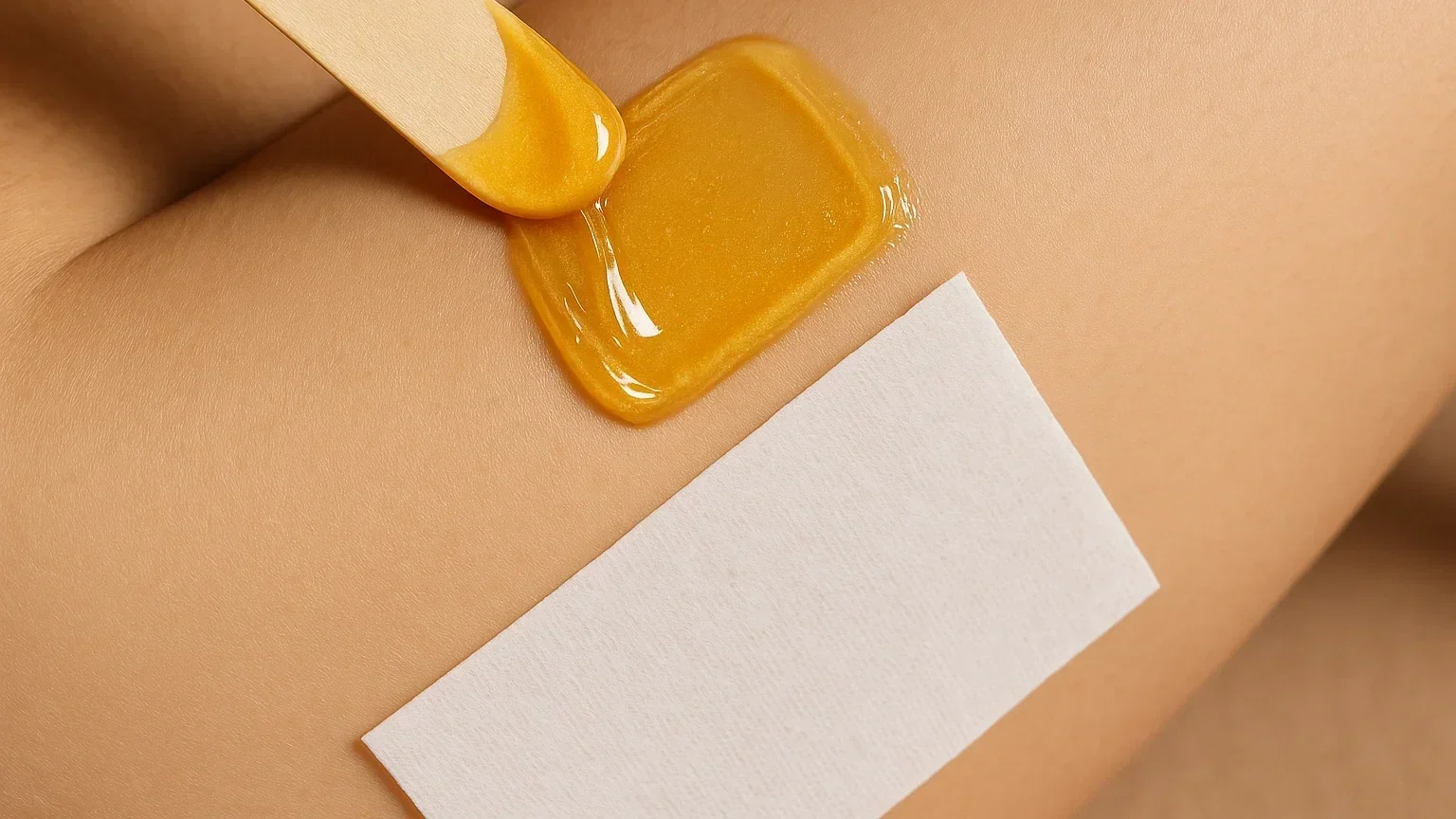
What Soft Wax Is (And Why It Still Has a Place)
Soft wax (often called strip wax) is applied in a thin layer and removed with a cloth or paper strip.
It’s spread quickly and evenly, then pulled off with the strip in one swift movement. Soft wax is efficient and great for covering large areas.
Soft wax sticks to hair, but it also grabs more of the top layer of skin compared to hard wax. This isn’t always a bad thing. It’s one reason your skin can feel extra smooth after waxing; soft wax gently exfoliates as it removes hair.
Soft wax is commonly used for:
Legs
Arms
Back and chest
Larger zones where speed and coverage matter
When someone says soft wax feels “stronger,” what they’re usually describing is that wider pulling sensation. Because it’s applied in a thin layer across more skin, the removal can feel broader. It’s not necessarily harsher; just different in how the pull is distributed.
Hard Wax vs Soft Wax: What Actually Feels Different
Let’s forget the marketing language for a second and talk about what you’ll actually notice in the treatment room.
With hard wax, the removal tends to feel more targeted. It grabs the hair and pulls it off in a slightly more controlled motion. With soft wax, you’ll feel a bit more surface involvement because it’s spread so thinly and removed with a strip.
Hard wax is often chosen for coarse hair or more delicate areas.
Soft wax shines on larger zones where efficiency matters.
One isn’t “advanced.” One isn’t “basic.” They’re just different tools for different situations.
If you’re wondering which wax is better, the answer is simple: it’s the one that fits your skin and hair, and is applied by someone who knows what they’re doing.
Does Hard Wax Hurt Less?
This is one of the most common questions: does hard wax hurt less than soft wax?
Pain isn’t only about wax type. It’s also about what’s going on in your body that day.
Hormones absolutely play a role, especially around your cycle. Stress and muscle tension can make removal feel sharper. Even how regularly you wax can change the experience, since consistent waxing weakens the hair over time.
And then there’s the human factor.
A highly trained wax specialist using soft wax can create a smoother experience than someone inexperienced using hard wax. The hands matter. The stretch matters. The timing matters.
Wax type is only part of the story.
Which Wax Is Best for Sensitive Skin
If you’ve ever searched “best wax for sensitive skin,” you’re not alone. When your skin tends to get red or reactive, it makes sense to want the safest option, especially if you’re unsure how long post-wax reactions typically last.
But here’s what matters more than the label on the wax pot: how the entire service is handled.
Think about the full picture:
Was your skin properly cleansed and prepped?
Was the wax temperature adjusted throughout the service?
Was your skin held firmly during removal so it wasn’t being tugged?
Did the waxer avoid going over the same area repeatedly?
Were you given clear aftercare instructions that actually make sense?
Sensitive skin responds best when the process is thoughtful from start to finish, not rushed.
If you’re reactive, look for a studio that emphasizes skin health as much as smoothness.
Brazilian Wax: Hard Wax or Soft Wax?
If you’re wondering whether a Brazilian wax should always be done with hard wax, you’re definitely not alone. A lot of online advice makes it sound like hard wax is the only correct option.
In reality, Brazilian waxing can be done very successfully with either hard wax or soft wax. What matters most is how the wax is applied, the condition of the skin, and the experience of the professional performing the service.
The Brazilian area typically has coarser hair and more sensitive skin, which means the technique needs to be thoughtful and controlled. Some wax specialists prefer hard wax because it allows them to work in smaller sections and carefully follow different hair growth patterns.
Others prefer soft wax for Brazilians because it can remove stubborn hair efficiently and leave the skin feeling very smooth when used with the right technique.
In many studios, the choice comes down to:
The client’s hair type
Skin sensitivity
The waxer’s training and preferred technique
What produces the cleanest removal with the least irritation
So if your studio uses soft wax for Brazilian services, that’s not unusual or “less professional.” Both methods can work beautifully when the service is performed with care and experience.
How Wax Temperature Changes the Experience (More Than People Realize)
Here’s something most clients don’t hear enough: wax temperature can change everything, regardless of wax type.
Wax that’s too cool can:
drag on the skin
apply unevenly
require extra pressure
increase discomfort
Wax that’s too hot can:
increase redness and sensitivity
trigger irritation faster
(in worst cases) cause burns
Hard wax usually works best at a certain temperature, where it spreads easily and sets at the right pace. Soft wax also has an ideal temperature range so it can be applied thinly without sticking or missing spots.
When someone says, “That wax felt harsh,” the culprit is often:
inconsistent warmer temperature
wax that wasn’t stirred/maintained properly
wax applied too thick or too thin
a room that was cold/humid and changed the wax behavior
A professional studio always keeps an eye on wax temperature. That attention to detail is part of what you’re paying for.
Hair Type Matters More Than Wax Type (Yes, Really)
If you and your friend have totally different waxing experiences, the difference might not be the wax at all; it might be your hair.
Hair varies more than most people realize. Thickness, density, how deeply it sits in the follicle, the direction it grows, even how curly it is; all of that changes how removal feels.
Coarse, deeply rooted hair (especially in underarms and bikini areas) often responds well to a wax that grips firmly without repeatedly working the skin.
Fine hair on legs and arms can usually be removed quickly and cleanly with soft wax in thin layers.
And curly hair that tends to grow back into the skin? That’s often more about maintenance than wax type. Staying consistent with appointments, exfoliating at the right time (not too early), keeping the skin hydrated, and avoiding shaving between visits all make a bigger difference.
A good wax specialist watches how your hair behaves. They don’t just follow a trend.

Why Some Studios Use Only One Wax Type
You might see studios advertise “hard wax only” as if that automatically means higher quality.
Sometimes it does mean they’ve specialized, invested in training, and built a consistent system. Other times, it’s simply a business choice.
Studios may choose one wax system because:
it simplifies training
it speeds services
it streamlines inventory
it fits brand positioning
it lowers costs
There’s nothing wrong with specializing in one wax type. But the key question is:
Do they understand when another approach would be better?
Studios that are flexible often have more expertise. If a studio can clearly explain their choices without being defensive, it usually means they take your skin seriously.
What About Skin Lifting or “Wax Burns”?
Skin irritation or lifting can happen with either wax type if things aren’t handled carefully.
For example:
If the same spot is gone over repeatedly.
If the wax is pulled at the wrong angle.
If the skin isn’t held firmly during removal.
If wax is applied too thick and removed too slowly.
Soft wax sometimes gets blamed because it covers more surface area. But hard wax can also cause problems if it’s overused or applied improperly.
A safe waxing experience comes down to the details:
A proper consultation.
Checking for medications or active skincare use.
Adjusting technique for your skin type.
Avoiding unnecessary repeat passes.
Keeping aftercare simple and calming.
That’s what protects your skin, not just choosing one wax over another.
Does One Wax Type Last Longer?
When people ask whether hard wax lasts longer than soft wax, what they’re really asking is whether one keeps them smoother for more time.
Both types remove hair from the root. Once the hair is fully removed, regrowth depends on your natural cycle, not the wax label.
What really affects how long you stay smooth?
Consistency with appointments.
Not shaving in between.
Hormonal factors.
And yes, how thoroughly the hair was removed during the service.

Aftercare Matters More Than Most People Want to Hear
Many clients focus on which wax was used, only to undo their results afterward.
If smoother skin and fewer bumps are the goal, what you do in the first 24–48 hours matters, and following proper pre and post-wax care makes all the difference.
For example:
Wearing very tight clothing immediately after a Brazilian can create friction.
Taking a hot shower or hitting a workout class right away can increase inflammation.
Applying heavy oils or heavily fragranced lotions too soon can clog open follicles.
Exfoliating the same day can irritate skin that’s still settling.
Constantly checking or picking at follicles can make minor bumps worse.
Hard wax doesn’t automatically prevent irritation. Soft wax doesn’t automatically cause it.
Aftercare often makes the biggest difference.
What People Get Wrong About Hard Wax vs Soft Wax
A few myths worth clearing up:
Myth: Soft wax is outdated or low quality
That’s not true. Soft wax is still used in many top studios because it works very well for certain areas, especially legs and backs.
Myth: Hard wax is always less painful
Sometimes hard wax is less painful, but not always. Pain depends on your hair type, the area being waxed, hormones, and the technique used.
Myth: One wax type prevents ingrown hairs
Ingrown hairs are usually caused by how your hair grows back and how you exfoliate and hydrate, which is why wax prep (and exfoliation) matters more than wax type.
How to Choose the Right Studio (Instead of Obsessing Over Wax Type)
If you’re trying to decide where to book, asking about wax type is fine, but don’t stop there.
Instead, ask questions that tell you how they think.
What wax do you typically use for Brazilians, and why?
How do you adjust for sensitive or reactive skin?
What’s your sanitation process between clients?
When do you recommend starting exfoliation?
A confident, experienced studio will answer clearly without getting defensive or vague.
That’s usually a good sign.
FAQs Clients Ask (Because You’re Probably Thinking Them)
“Can I request hard wax?”
Yes. And a good waxer will tell you if it makes sense for that area.
“Is soft wax bad for Brazilian?”
Not at all. Brazilian waxing can be done with either soft wax or hard wax. What matters most is the waxer’s technique, the temperature of the wax, and how carefully the skin is handled during the service.
Some studios prefer hard wax for Brazilians, while others use soft wax successfully. A skilled wax specialist can achieve excellent results with either method.
“Why do I get red dots after waxing?”
It’s often just a normal reaction from your hair follicles that goes away in a day or two. If bumps last longer, it’s usually due to friction, heat, using too many products, or exfoliating at the wrong time.
“Why did it hurt more this time?”
It could be hormones, stress, dehydration, hair length, or just that your skin was more sensitive that day. Waxing can feel different each time, even with the same wax.
The Confidence Factor (The Part Nobody Talks About)
There’s one more factor that truly changes the waxing experience: trust.
Clients who feel safe and confident with their wax specialist usually relax more. This is important because tension can make waxing feel worse. When your skin is held properly and you’re not tensing up, the process feels faster and smoother.
Confidence doesn’t come from the wax pot. It comes from:
communication
professionalism
technique
and aftercare education
That’s what turns a basic wax into a truly good experience.
So… Which Wax Is Better?
Here’s the real answer: neither wax is automatically better.
Hard wax often works beautifully for areas that require precision, such as facial waxing, underarms, and some bikini services.
Soft wax tends to be efficient and effective for larger areas like legs, arms, and backs — and it can also be used successfully for more detailed services when applied with the right technique.
What ultimately matters most is the professional performing the service, how the wax is handled, and how your skin is cared for before and after the appointment.
That’s what turns a basic wax into a genuinely good experience.
Final Thoughts
At the end of the day, great waxing isn’t about choosing one wax over another, it’s about understanding skin, hair, and technique. Experienced studios take the time to evaluate what works best for each client and adjust their approach accordingly. That kind of thoughtful, skin-focused care is what helps clients leave not only smoother, but more confident in their waxing experience.
